When Sophia lost her part-time job during her second year of college, everything started to feel uncertain. She had been attending a traditional university in Illinois, living in a shared apartment, managing classes, work, and daily expenses. But suddenly, things changed. Money became tight, and the idea of continuing the same way felt difficult.
One evening, while scrolling through her laptop, she came across an ad for an online degree program. It promised flexibility, lower costs, and the ability to study from anywhere. At first, she was unsure. Could an online degree really hold the same value as a traditional one? Would employers take it seriously? Would she miss out on the “college experience”?
Sophia’s questions are not unusual. Across the USA in 2026, more students are thinking about online education, not just as an alternative, but as a serious option. But the real question remains. Are online degrees actually worth it?
The Changing Face of Learning in the Digital Age
Sophia remembered how her older cousin used to talk about online courses years ago. Back then, they were often seen as secondary options, something people did when they couldn’t attend a regular college. But now, things look very different.
Online learning has grown rapidly, especially after major changes in how education is delivered. Many well-known universities in the USA now offer fully online degree programs. These are not short courses or basic certificates. They are full degrees, with structured curriculums, experienced professors, and recognized credentials.
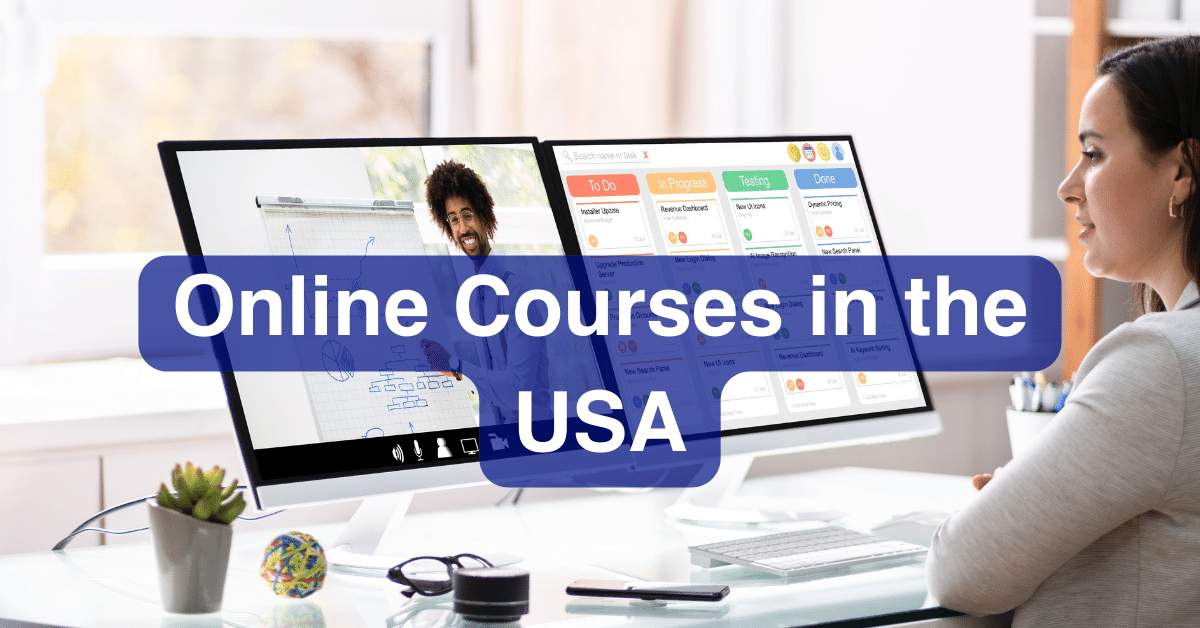
When Sophia started exploring, she noticed that online classes were designed to be interactive. Students could attend live sessions, participate in discussions, submit assignments, and even work on group projects. Recorded lectures allowed them to revisit topics anytime, which made learning more flexible.
One thing that stood out to her was the ability to learn at her own pace. In her previous university, she often struggled to keep up with the speed of lectures. Sometimes she needed more time to understand a topic, but the class had already moved on. With online learning, she could pause, rewind, and review material until she felt confident.
Another change was the use of modern tools. Digital platforms now include quizzes, simulations, and AI-based support that helps students track their progress. Learning is no longer limited to textbooks. It is more dynamic and adaptable.
But Sophia also noticed that online learning requires discipline. Without a fixed schedule or physical classroom, it is easy to fall behind. Students need to manage their time, stay organized, and take responsibility for their progress. For some, this independence is empowering. For others, it can be challenging.
As Sophia continued her research, she realized that online learning is no longer a backup option. It is becoming a mainstream way of education, shaped by technology and changing student needs.
Cost, Flexibility, and Real-Life Balance
Sophia’s biggest concern was money. Traditional college had become expensive, and managing rent, food, and transportation added extra pressure. When she compared costs, online programs seemed more affordable.
Many online degrees have lower tuition fees than on-campus programs. Students also save money by not paying for housing, commuting, or campus services. For someone like Sophia, this made a huge difference. It meant she could continue her education without taking on heavy debt.
Flexibility was another major advantage. Online learning allowed her to create her own schedule. She could study in the morning, work in the afternoon, and complete assignments at night. This balance gave her a sense of control that she didn’t have before.
She spoke to a friend who had already switched to an online program. He told her that he was able to work full-time while studying. This not only helped him support himself but also gave him work experience before graduation. By the time he finished his degree, he already had a few years of professional experience, which made job searching easier.
Sophia also realized that online education opens doors for people who might not otherwise have access to college. Students living in remote areas, parents managing family responsibilities, or individuals looking to change careers can all benefit from this flexibility.
However, she also thought about what she might miss. There would be no campus events, no face-to-face interactions, and fewer chances for spontaneous conversations with classmates. The traditional college experience, with its social life and activities, would be different.
For Sophia, this was a trade-off. She had to decide what mattered more at this stage of her life. Stability and flexibility, or the full campus experience. She began to understand that online learning is not about replacing traditional education, but about offering a different path that suits certain needs better.
Employer Perspective and Career Value
Even after seeing the benefits, Sophia still had one big question in mind. Would employers respect an online degree?
She decided to speak with a career advisor and also reached out to a few professionals on networking platforms. The answers she received were reassuring but also realistic.
Employers today care more about skills and experience than the format of education. If the degree comes from an accredited and recognized institution, it generally holds value, whether it was earned online or on campus. What matters most is what the student has learned and how they apply it.
Sophia learned that many online programs are offered by the same universities that run traditional courses. This means the curriculum, faculty, and standards are often the same. In some cases, the diploma does not even mention whether the degree was completed online.
But there was also an important point. Not all online programs are equal. Some low-quality or unaccredited institutions offer degrees that may not be taken seriously. Students need to research carefully, check accreditation, and choose programs with a good reputation.
Another factor is practical experience. Employers value internships, projects, and real-world skills. Sophia realized that if she chose an online program, she would need to actively seek opportunities to gain experience. This could include freelance work, internships, or personal projects.
She also noticed that certain fields are more suited to online learning than others. Degrees in business, technology, communication, and design often work well online. On the other hand, fields that require hands-on training, like medicine or lab-based sciences, may still need in-person components.
Sophia spoke to a hiring manager who shared an interesting perspective. He said that students who complete online degrees often develop strong self-discipline and time management skills. These qualities are valuable in the workplace, especially in roles that require independence and remote work.
This gave Sophia a new way of looking at online education. It was not just about convenience. It was also about building a different set of strengths.
As Sophia sat at her desk one evening, she thought about everything she had learned. Online education was not perfect, and it was not for everyone. But it was real, practical, and increasingly accepted in the modern world.
She realized that the value of a degree does not come only from where or how it is earned. It comes from the effort, the skills, and the experiences that come with it. Online learning simply offers a different way to reach the same goal.
For Sophia, the decision became clearer. She chose an online program that matched her interests and fit her situation. It allowed her to continue her education without putting her life on hold.
Across the USA in 2026, many students are making similar choices. They are not just asking if online degrees are worth it. They are asking how to make the most of them.