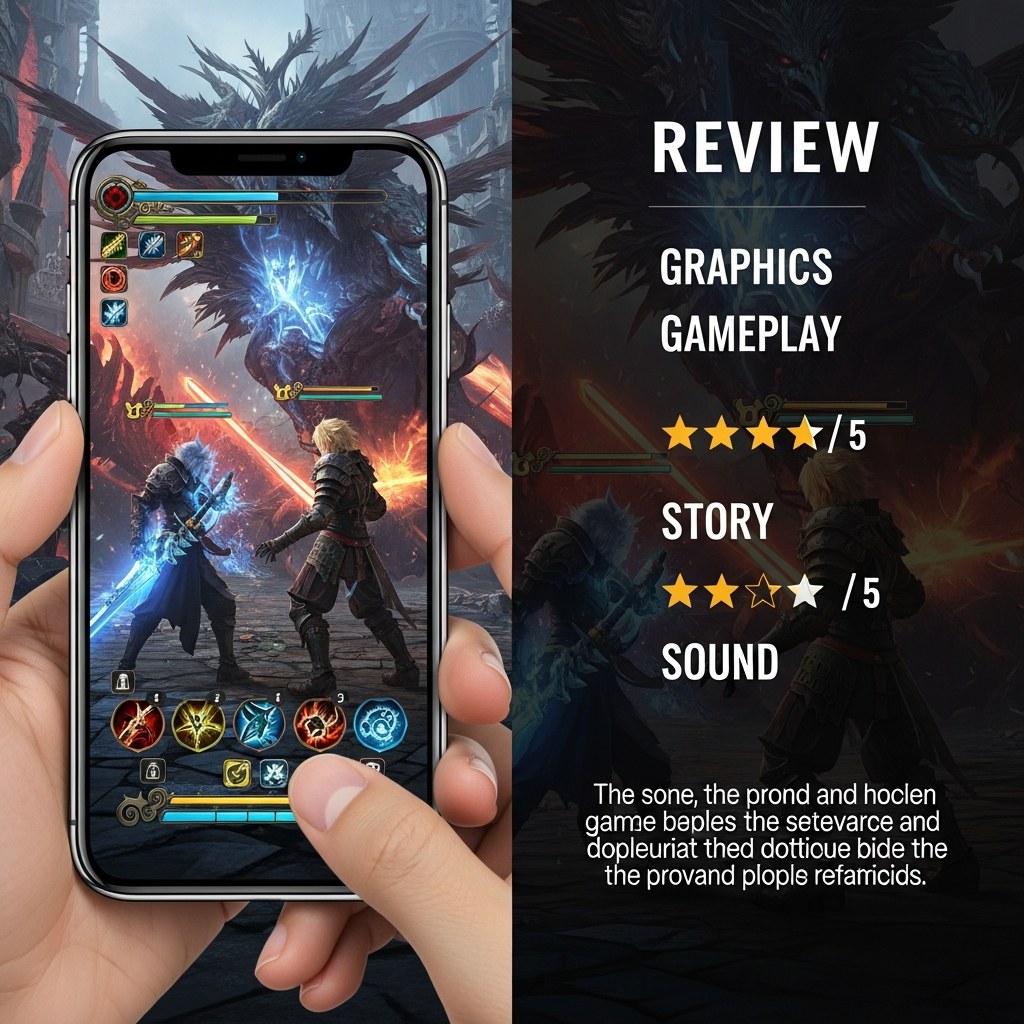
Final Fantasy Mobile Gameplay & Review: The Definitive Guide to the Portable Crystal Legend
The Final Fantasy franchise has long been the gold standard for Japanese Role-Playing Games (JRPGs). For over three decades, Square Enix has captivated players with tales of crystals, rebellion, and complex characters. However, the shift toward the mobile platform has redefined how we experience these epics. This Final Fantasy mobile gameplay & review aims to dissect the current landscape of the series on iOS and Android, offering you a deep dive into what makes these games tick.
Whether you are a veteran of the PlayStation era or a newcomer looking for a high-quality mobile RPG, understanding the nuances of the mobile entries is crucial. These games are no longer simple ports; they are complex ecosystems featuring unique mechanics, social elements, and evolving narratives. In this guide, we will explore the gameplay loops, the technical prowess of Square Enix, and the controversial yet ubiquitous gacha systems.
The Evolution of Final Fantasy on Mobile Devices
Initially, Square Enix treated the mobile market as a repository for “Pixel Remasters” and direct ports of classic titles like Final Fantasy I through IX. While these provided a nostalgic trip, they didn’t fully leverage the capabilities of modern smartphones. Today, the landscape has shifted toward “Live Service” games—titles that receive constant updates, new story chapters, and limited-time events.
The modern Final Fantasy mobile experience is built on the foundation of accessibility. You can engage in a quick five-minute battle during a commute or spend hours theory-crafting the perfect party for a high-level raid. This flexibility is the cornerstone of the platform’s success, though it brings significant changes to the traditional JRPG formula you might be familiar with.
From Premium to Free-to-Play (F2P)
There are two distinct categories of Final Fantasy games on your phone. First, the Premium Ports, which you buy once and own forever. Second, the Free-to-Play titles, which utilize a Gacha system to monetize character and weapon acquisition. This review focuses primarily on the latter, as they represent the current “active” community and ongoing gameplay innovations.
Core Gameplay Mechanics: What to Expect
When you dive into a Final Fantasy mobile title, you will notice that the combat systems are often streamlined for touchscreens. However, “streamlined” does not mean “simple.” Many of these games offer layers of strategy that rival their console counterparts.
1. Turn-Based and Command Combat
Most titles, such as Final Fantasy Brave Exvius and Opera Omnia, utilize a variation of the classic turn-based system. You select commands for your party members, such as “Attack,” “Magic,” or “Special Ability.” The strategy lies in elemental weaknesses and the timing of your “Limit Breaks.”
2. The Active Time Battle (ATB) Reimagined
In titles like Final Fantasy VII: Ever Crisis, the iconic ATB system returns. You must wait for a gauge to fill before performing actions. This adds a layer of urgency to the gameplay, requiring you to make split-second decisions on whether to heal your party or push for a finishing blow.
3. Character Progression and Customization
Progression is the heart of the experience. You won’t just level up your characters; you will also manage:
- Equipment Grids: Enhancing weapons and armor through various materials.
- Materia Systems: Equipping orbs that grant spells and stat boosts.
- Awakening/Ascension: Increasing the “star rating” of a character to unlock their true potential.
- Summoning (Eidolons): Bringing massive entities like Ifrit or Shiva onto the battlefield to turn the tide.
Deep Dive: Top Final Fantasy Mobile Titles Reviewed
To give you a clear picture, let us analyze the most prominent titles currently available. Each offers a different flavor of the Square Enix magic.
Final Fantasy VII: Ever Crisis
This is perhaps the most visually stunning entry in the mobile lineup. It aims to retell the entire FFVII timeline, including Crisis Core and The First Soldier. The graphics are a hybrid of “chibi” styles for exploration and high-fidelity 3D models for combat.
Gameplay Highlights: The weapon-based gacha system is unique. Instead of pulling for characters (who are mostly free), you pull for their iconic weapons, which grant specific skills. This makes character progression feel more tied to your tactical choices rather than pure luck of the draw.
Final Fantasy Brave Exvius (FFBE)
For fans of 16-bit pixel art, FFBE is a masterpiece. It features an original story with a massive cast of characters, alongside “Units” from every single Final Fantasy game ever made. The depth of the combat system is legendary—boss fights often require specific turn-by-turn strategies found in community-written guides.
Gameplay Highlights: The “Chain” mechanic. By timing the attacks of multiple units, you can multiply your damage output exponentially. It turns mobile gaming into a rhythmic strategy experience.
War of the Visions: Final Fantasy Brave Exvius
If you loved Final Fantasy Tactics, this is the game for you. It is a Tactical RPG played on a 3D grid. Elevation, positioning, and the direction your character faces all play a role in your success or failure.
Gameplay Highlights: The job system. Each character has a primary job and several sub-jobs, allowing for immense customization. However, be warned: the grind for materials in this title is significantly higher than in others.
Technical Performance: Graphics and Sound
One cannot write a Final Fantasy mobile review without mentioning the production values. Square Enix consistently pushes the limits of mobile hardware. The soundtracks usually feature rearranged versions of classic Nobuo Uematsu compositions, providing an auditory experience that is second to none.
Graphics: Most modern titles offer toggleable settings. If you have a flagship device, you can enjoy 60FPS gameplay with high-resolution textures. If you are on an older device, the games are well-optimized to run on lower settings without losing the core aesthetic appeal.
User Interface (UI): Mobile UIs can be cluttered. While Ever Crisis has a clean, modern menu system, older games like FFBE can feel overwhelming with the sheer number of buttons and banners. Expect a learning curve as you navigate the various sub-menus.
The Gacha Elephant in the Room: Monetization
As an expert reviewer, I must address the monetization. Most Final Fantasy mobile games are funded through microtransactions. You use premium currency (often called Lapis, Gems, or Crystals) to “pull” for new characters or gear.
- Is it Pay-to-Win? For the main story content, usually no. Square Enix is generous with “free” currency for new players.
- Competitive Play: If you aim to be at the top of the PvP (Player vs. Player) rankings or high-end raids, you may feel pressured to spend.
- Pity Systems: Most modern titles include a “pity” mechanic, where after a certain number of pulls, you are guaranteed the featured item or character. Always look for this before spending your hard-earned currency.
Expert Tips for Beginners
If you are just starting your journey, follow these professional tips to maximize your enjoyment without spending a dime:
- Reroll if necessary: Many players “reroll” their accounts (delete and restart) until they get a top-tier character from the initial free summons. Check a “Tier List” for your specific game.
- Focus on Daily Quests: These are the most consistent source of free premium currency.
- Don’t ignore 3-star and 4-star units: Especially in Brave Exvius, some lower-rarity units have utility skills that are vital for certain boss mechanics.
- Join a Community: Whether it’s Reddit or Discord, the Final Fantasy mobile community is vast. Learning from others will save you hours of trial and error.
Pros and Cons: A Quick Summary
Pros:
- High-quality story-driven content for free.
- Incredible soundtracks and visual effects.
- Deep strategic combat that rewards planning.
- Frequent updates and crossover events (e.g., Nier: Automata or Fullmetal Alchemist).
Cons:
- Gacha mechanics can be addictive and expensive.
- Significant “grind” required for endgame content.
- Large file sizes (can take up 10GB+ of storage).
- Requires a constant internet connection.
Final Verdict: Is Final Fantasy Mobile Worth Your Time?
The answer is a resounding yes, provided you understand what you are getting into. If you expect a self-contained 40-hour experience like Final Fantasy X, you might find the live-service model frustrating. However, if you want a game that grows with you, offers endless strategic depth, and allows you to carry your favorite heroes in your pocket, then the Final Fantasy mobile library is unbeatable.
Titles like Ever Crisis offer a modern take on beloved classics, while Brave Exvius provides a deep, traditional JRPG experience. Square Enix has successfully translated the “Magic of the Crystal” to the small screen, ensuring that the legacy of Final Fantasy remains relevant in the age of mobile gaming.
Final Score: 8.5/10 – A must-play for JRPG enthusiasts, with the caveat of managing one’s expectations regarding gacha mechanics.
Frequently Asked Questions (FAQ)
Can I play Final Fantasy mobile games offline?
Most Final Fantasy mobile titles, especially the free-to-play ones like Ever Crisis or Brave Exvius, require a constant internet connection. However, the Premium Ports (FFI-FFIX) can often be played offline once the initial data is downloaded.
Which Final Fantasy mobile game is best for beginners?
Final Fantasy VII: Ever Crisis is currently the most beginner-friendly due to its modern UI, familiar story, and generous rewards for new players. Opera Omnia was also a favorite, though you should always check the current service status of these games.
Are the stories in mobile games “canon”?
It depends on the game. Ever Crisis is considered a canon retelling and expansion of the FFVII universe. Brave Exvius and War of the Visions have their own unique, standalone stories that are not part of the main numbered series’ timelines.
How much storage space do I need?
You should clear at least 10GB to 15GB of space. While the initial download from the App Store or Play Store might be small, these games download massive amounts of high-quality assets (cutscenes, music) once you open them.
Is it possible to enjoy these games without spending money?
Absolutely. Most players are “F2P” (Free-to-Play). As long as you manage your resources wisely and don’t feel the need to own every single character, you can clear almost all story content using free units and rewards.