One Piece Bounty Rush Gameplay & Review: The Definitive Guide to Dominating the Grand Line
The world of mobile gaming is saturated with anime adaptations, but few have managed to capture the frantic energy and strategic depth of Eiichiro Oda’s masterpiece quite like One Piece Bounty Rush (OPBR). Developed by Bandai Namco Entertainment, this title has evolved from a rocky launch into one of the most competitive and popular mobile MOBAs (Multiplayer Online Battle Arenas) available today.
Whether you are a die-hard fan of the Straw Hat Pirates or a competitive gamer looking for your next obsession, understanding the nuances of One Piece Bounty Rush gameplay is essential. In this comprehensive review and guide, we will dissect every layer of the game, from its core mechanics to the complex meta-strategies required to reach the prestigious SS League.
What is One Piece Bounty Rush?
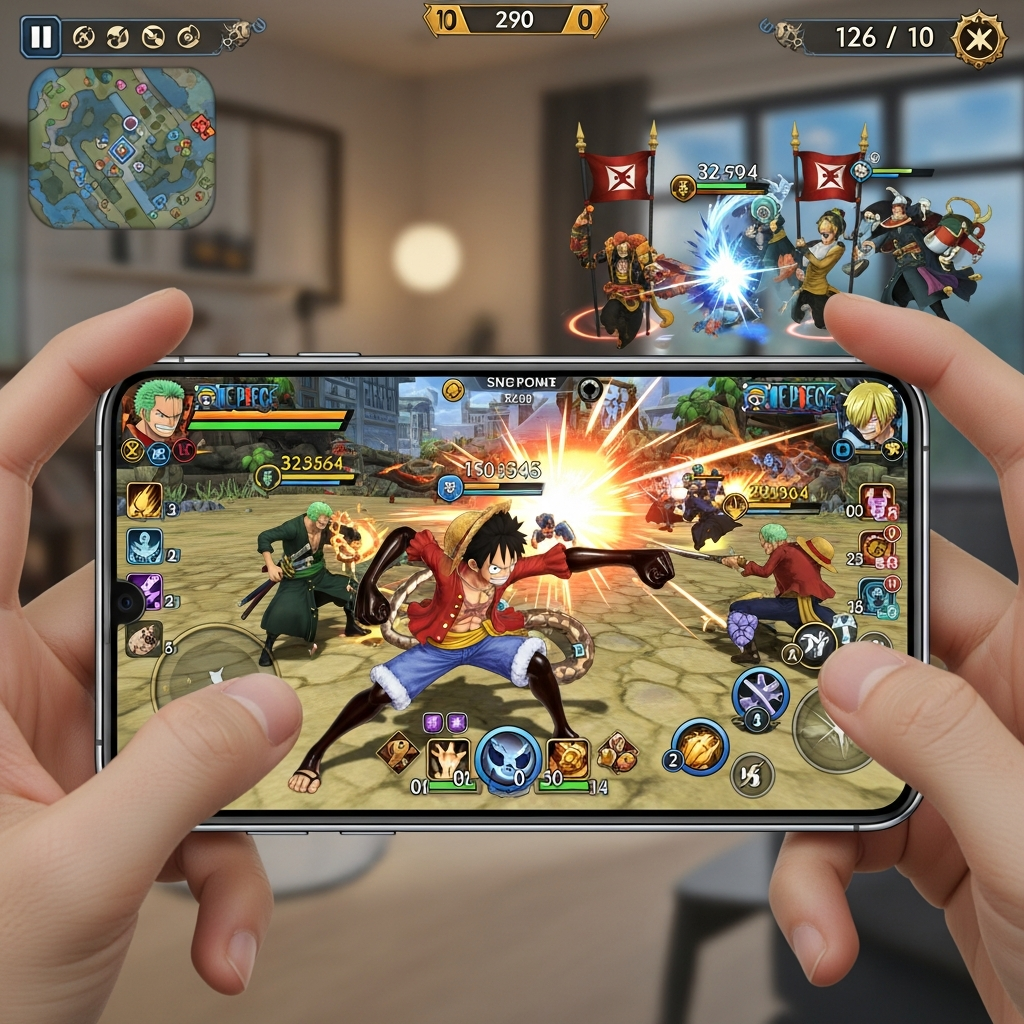
At its core, One Piece Bounty Rush is a 4v4 real-time treasure capture game. Unlike traditional MOBAs like Mobile Legends or Wild Rift, where the objective is to destroy a base, OPBR focuses on territory control. Two teams of four players battle across iconic locations from the anime—such as Marineford, Dressrosa, and Onigashima—to capture and hold five treasure flags.
The match lasts for three minutes. The team that holds the majority of the flags (3 out of 5) when the timer hits zero wins. Alternatively, if a team manages to capture all five flags simultaneously (a “5-0”), they win instantly via a “Total Capture.”
Deep Dive: One Piece Bounty Rush Gameplay Mechanics
To succeed in this game, you must look beyond simple combat. While knocking out opponents is satisfying, it is often secondary to the primary objective: Treasure Capture.
1. The Three Character Classes
Every character in the game is categorized into one of three roles. Understanding these roles is the difference between a novice and a pro.
- Runners: These are the speedsters. Their primary job is to capture flags. Runners have high mobility and can capture treasure gauges faster than other classes. In the final seconds of a match, a skilled Runner can turn a loss into a victory by sneaking behind enemy lines.
- Attackers: As the name suggests, these characters are built for combat. Their goal is to eliminate enemies and clear the treasure area so that Runners can do their job. They possess high damage output but often lack the defensive capabilities to hold a flag for long.
- Defenders: These are the anchors of the team. Defenders move slowly but have high survivability. Their unique mechanic allows them to fill the “Treasure Gauge” beyond its normal limit, making it take much longer for enemies to capture the flag.
2. The Elemental Triangle
OPBR employs a classic “Rock-Paper-Scissors” elemental system:
- Red beats Green.
- Green beats Blue.
- Blue beats Red.
Choosing the right element for your party is crucial for survival in the higher leagues, where elemental advantage can mean a 15-20% difference in damage dealt and received.
The Character Progression System: Building a Powerhouse
One of the most common questions from beginners is how to make their characters stronger. In One Piece Bounty Rush, “Character Power” is determined by several factors.
Character Level and Fragments
Characters start at 4 stars. To reach their maximum potential (Level 100, 6 stars), you need to collect Character Fragments. These are obtained through the Gacha system, the Battle Point Shop, or by putting your characters on the “Special Training” treadmill.
Character Boost
The “Boost” system allows you to spend specific resources (Boost Orbs) to increase base stats like HP, Attack, and Defense. Reaching “Boost 2” is considered the standard for competitive play, while “Boost 3” and “Boost 4” require a significant investment of resources usually reserved for dedicated players.
Skill Upgrades
Each character has two unique skills. These can range from Luffy’s “Gum-Gum Gatling” to Zoro’s devastating slashes. Upgrading these skills reduces their cooldowns and increases their damage or utility effects (such as stun, tremor, or knockback).
The Medal System: The Secret to High-Level Play
If you want to excel in One Piece Bounty Rush gameplay, you must master the Medal System. Medals are equippable items that provide stat boosts and unique traits.
- Medal Sets: Equipping medals from characters that share “Tags” (e.g., “Straw Hat Pirates,” “Worst Generation,” or “Captain”) activates set bonuses. These bonuses can provide faster skill cooldowns, increased capture speed, or damage reduction.
- Transferring Traits: You can “craft” the perfect medal by transferring high-level traits (like +14% Attack) from one medal to another.
- Event Medals: Bandai frequently releases limited-time event medals that are often superior to standard ones. Never miss an opportunity to farm these.
The Support System: Boosting Your Party Power
Your active battle party consists of two characters, but your overall strength is heavily influenced by your Support Party. You can equip up to 10 support characters.
The support percentage increases your stats significantly. A player with 160% support will almost always defeat a player with 120% support, even if they are using the same character. To optimize support:
- Use characters of the same color as your main battle units.
- Level up the skills and medals of your support units.
- Focus on “Tags” within the support party to gain extra buffs like “New World” (increased damage against the element you are weak to) or “Zoan” (reduced damage received).
One Piece Bounty Rush Review: The Good, The Bad, and The Gacha
The Pros
- Authentic Experience: The character models, voice acting (original Japanese VAs), and skill animations are top-tier. It feels like playing the anime.
- Strategic Depth: Unlike many mobile games that are “pay-to-win” stat checks, OPBR allows skilled players to outplay whales through perfect dodges and map awareness.
- Active Community and Updates: The game receives constant updates, new characters, and balance patches, keeping the meta fresh.
The Cons
- The Power Creep: The introduction of “Extreme” (EX) characters—ultra-rare units like Gear 5 Luffy or Hybrid Kaido—can sometimes make the game feel unbalanced.
- Gacha Rates: The rates for top-tier units are notoriously low, and the “Pity” system for EX characters often requires thousands of Rainbow Diamonds.
- Connection Issues: Being a real-time global game, players occasionally experience “latency” or “lag,” which can be frustrating during a “Perfect Dodge” attempt.
Advanced Strategies for Beginners
If you are just starting your journey in One Piece Bounty Rush, follow these expert tips:
- Don’t Ignore the Treasure Gauge: If you are a Defender, stay on the flag until the gauge is full. A full gauge takes longer for the enemy to capture, giving your team time to respawn.
- Master the Perfect Dodge: If you dodge just as an enemy attack is about to hit, you become invincible for a short period. This is the most important mechanical skill in the game.
- Watch the Mini-Map: Always keep an eye on the map. If you see an undefended flag, go for it. Don’t get “tunnel vision” by focusing only on fighting.
- Save Your Rainbow Diamonds: Don’t pull on every banner. Wait for “Bounty Fest” or “Extreme” banners where the characters are significantly stronger and have more longevity in the meta.
Game Modes in One Piece Bounty Rush
While League Battle is the main attraction, there are several other modes to explore:
- Challenge Battle: Weekly events with unique rules (e.g., fixed levels, 2v2, or “Brawl 8”). These provide essential upgrade materials.
- Survival 100: A solo mode where you test your character against 100 enemies. Great for practicing combos.
- Solo Missions: Replay iconic story moments to earn Rainbow Diamonds and experience points.
Is One Piece Bounty Rush Free-to-Play Friendly?
The short answer is: Yes, but it requires patience.
A Free-to-Play (F2P) player can absolutely reach the SS League. Bandai is generous with Rainbow Diamonds during anniversaries and special events. However, an F2P player must be disciplined. You cannot max out every character. You must pick a color (Red, Blue, or Green) and focus all your resources on building a strong team and support for that specific color.
Final Verdict
One Piece Bounty Rush is arguably the best One Piece game on the mobile market. It successfully blends the charm of the source material with a competitive, high-stakes gameplay loop. While the gacha elements and power creep can be daunting, the satisfaction of a last-second flag capture or a perfect team wipe is unparalleled.
Whether you’re playing as Pirate King Roger or a humble Step-Up character like Reju, the Grand Line awaits. Strategize, capture, and dominate.
Frequently Asked Questions (FAQ)
1. Who is the best character in One Piece Bounty Rush?
The “best” character changes with the meta. Usually, the most recently released Extreme (EX) character holds the top spot. However, characters like Gear 5 Luffy, Whitebeard (Light Element), and Roger (Dark Element) are currently among the most dominant.
2. How do I get more Rainbow Diamonds?
You can earn Rainbow Diamonds by completing daily missions, climbing the League ranks, finishing Solo episodes, and participating in limited-time events. Logging in during Anniversary celebrations is the fastest way to accumulate them.
3. What does “Rerolling” mean in OPBR?
Rerolling is the process of deleting and reinstalling the game (atau clearing data) to use the initial free summons to get a top-tier character. This is highly recommended for new players to start with at least one “Ex” or high-tier “Bounty Fest” unit.
4. Can I play One Piece Bounty Rush on PC?
While there is no official PC version, many players use Android emulators like BlueStacks or LDPlayer. However, be aware that the game is optimized for touch controls.
5. What are “Step-Up” characters?
Step-Up characters are easier to obtain and max out than Bounty Fest or EX characters. While they are generally weaker, some “Step-Ups” are incredibly viable in high leagues due to their specific utility or support tags.