When Lauren walked into her first job interview in Chicago, she felt prepared. She had spent weeks reviewing technical concepts, practicing questions, and going through everything she had learned during her degree. On paper, she was a strong candidate.
The interview started well. She answered technical questions confidently and explained her projects clearly. But halfway through, the interviewer shifted the conversation. Instead of asking about knowledge, he asked about teamwork, handling pressure, and dealing with conflict.
Lauren paused. She had not expected this.
Later, when she didn’t get the job, she received feedback that surprised her. Her technical skills were good, but the company was looking for someone who could communicate better and work more effectively with a team.
That experience changed how Lauren—and many others—understand the difference between soft skills and hard skills.
Understanding the Difference Between Soft Skills and Hard Skills
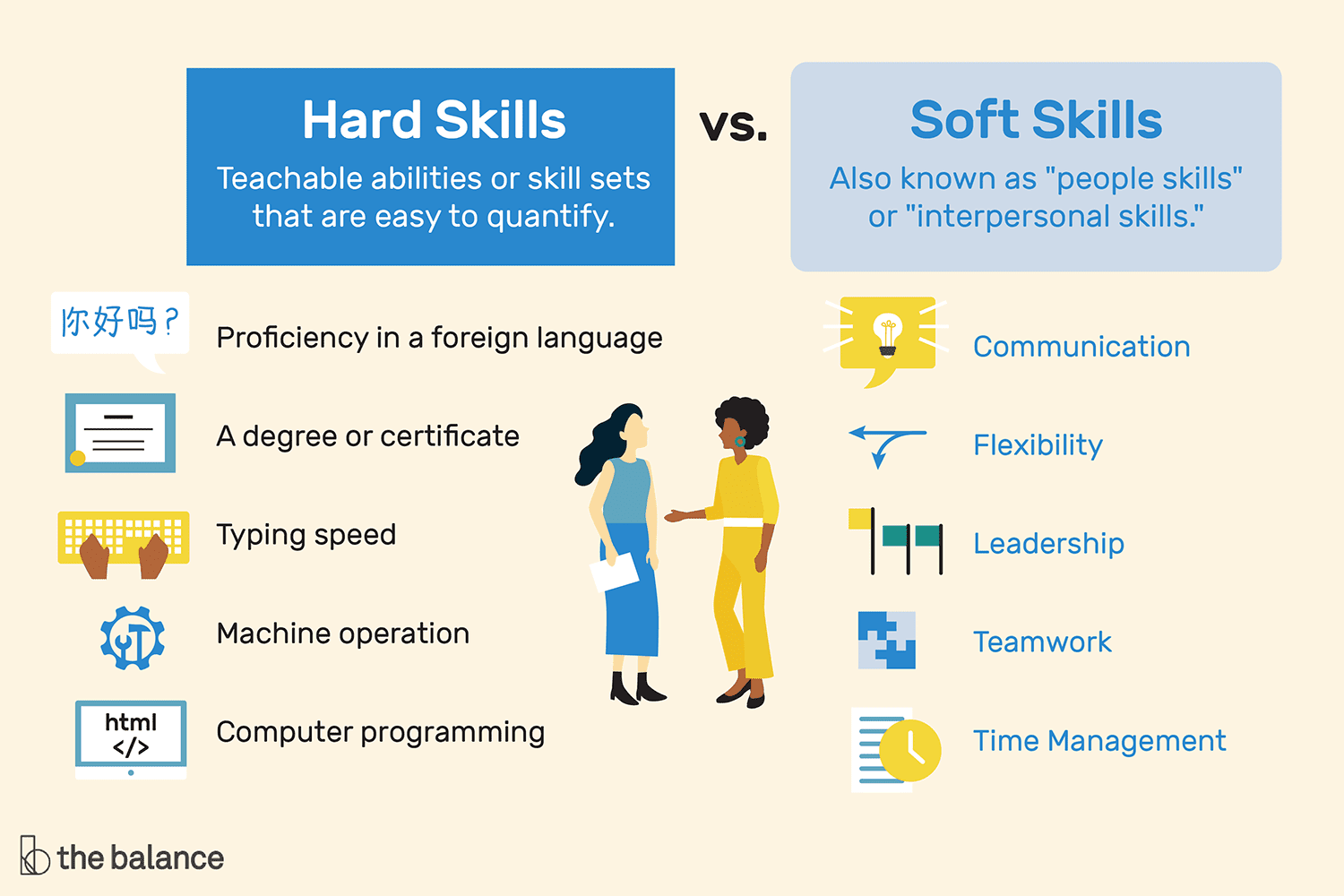
At first, the distinction between soft skills and hard skills seems simple. Hard skills are the technical abilities you learn through education and training. These include things like coding, accounting, data analysis, graphic design, or operating specific tools and software.
Soft skills, on the other hand, are about how you work. They include communication, teamwork, problem-solving, adaptability, and emotional intelligence.
Lauren had spent most of her time building hard skills. She believed that mastering technical knowledge would be enough to secure a good job. But what she didn’t realize was that employers in the USA are looking for a combination of both.
Hard skills are what get your resume noticed. They show that you have the knowledge required to perform a job. Without them, it is difficult to even get an interview.
But soft skills are what often decide whether you get hired.
When Lauren spoke to a career advisor later, she heard something that stayed with her. “Hard skills help you do the job. Soft skills help you succeed in the job.”
This made sense. A person might be excellent at writing code, but if they cannot communicate with their team or understand project requirements, their effectiveness becomes limited.
Similarly, someone in a business role might understand numbers and strategies, but without the ability to present ideas clearly or work with others, their impact reduces.
Understanding this balance is the first step toward building a strong career.
Why Employers in the USA Value Soft Skills More Than Ever
Lauren began observing job descriptions more carefully. She noticed that almost every role, regardless of industry, mentioned qualities like communication, teamwork, and adaptability.
At first, she thought these were just general statements. But as she spoke to professionals and attended interviews, she realized how seriously employers take them.
Workplaces in the USA are becoming more collaborative. Projects often involve teams with different roles and backgrounds. In such environments, the ability to communicate clearly and work well with others becomes essential.
Lauren also noticed how fast things were changing. New tools, new processes, and new challenges were part of everyday work. Employers wanted people who could adapt quickly and learn continuously.
This is where soft skills play a major role.
For example, problem-solving is not just about finding the right answer. It is about understanding the situation, thinking critically, and making decisions under pressure. Adaptability is not just about accepting change. It is about staying productive even when things are uncertain.
Emotional intelligence is another skill that is gaining importance. Understanding how to respond to different situations, managing stress, and interacting professionally with colleagues all contribute to a positive work environment.
Lauren realized that companies are not just hiring employees. They are building teams. And for teams to work well, soft skills are essential.
She also noticed that in leadership roles, soft skills become even more important. Managers need to guide teams, handle conflicts, and motivate people. Technical knowledge alone is not enough at that level.
This does not mean that hard skills are less important. It simply means that having technical knowledge without soft skills is not enough in today’s job market.
Building the Right Balance for Long-Term Success
After her experience, Lauren decided to approach her career differently. She did not stop improving her technical skills, but she also started working on her soft skills.
She practiced communication by explaining concepts in simple ways. She worked on listening carefully instead of just waiting to speak. She also became more aware of how she responded in stressful situations.
Group projects became an opportunity to improve teamwork. Instead of focusing only on completing tasks, she paid attention to how she interacted with others. She learned how to share ideas respectfully, handle disagreements, and support her teammates.
Lauren also started preparing for behavioral interview questions. Instead of just memorizing answers, she reflected on real experiences. Times when she faced challenges, solved problems, or worked with others. This helped her speak more naturally and confidently.
At the same time, she continued strengthening her hard skills. She worked on projects, learned new tools, and stayed updated with industry trends. This ensured that she remained technically strong.
What she discovered over time was that soft skills and hard skills are not separate. They work together.
For example, knowing how to analyze data is a hard skill. But presenting that data in a clear and convincing way requires communication skills. Writing code is a technical ability, but working with a team to build a product requires collaboration.
The combination creates real value.
Lauren also noticed that soft skills often grow with experience. The more you interact with people, handle challenges, and take responsibility, the more these skills develop. But being aware of them and actively working on them makes the process faster.
Over time, her approach started to show results. Interviews felt more natural. Conversations flowed better. Employers responded more positively.
She realized that success in the USA job market is not about choosing between soft skills and hard skills. It is about building both in a balanced way.
Looking back, Lauren understood that her earlier mistake was focusing on only one side of the equation. She had strong technical knowledge, but she hadn’t paid enough attention to how she worked with others.
In 2026, employers are looking for complete professionals. People who not only understand their work but can also communicate, adapt, and collaborate effectively.
Hard skills may open the door, but soft skills help you walk through it and grow beyond it.
For anyone starting their career, the lesson is simple. Do not ignore either side. Build your knowledge, but also build your ability to connect, communicate, and work with people.
Because in the end, what employers really want is not just what you know, but how you use it.