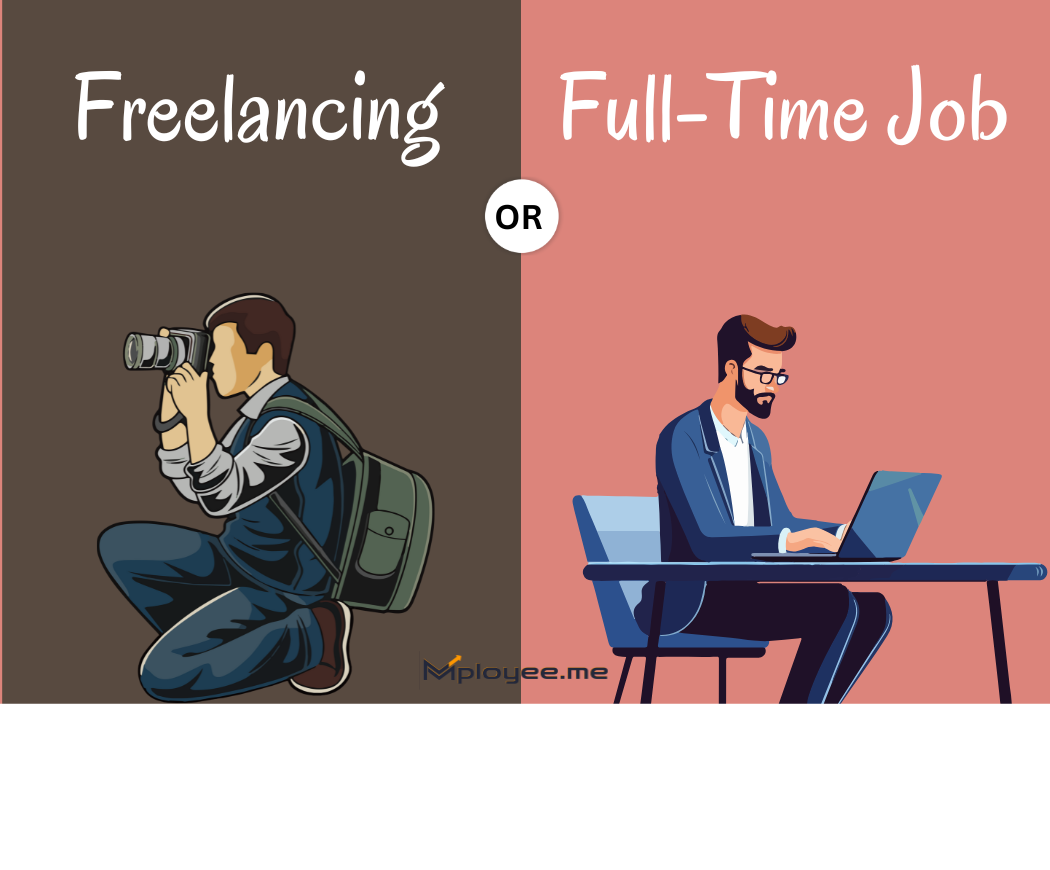
When Tyler finished his degree in California, he thought his next step was obvious. Get a full-time job, build a career, and move forward step by step. That’s what most people around him were doing.
But then something unexpected happened.
One of his friends, who had studied design, decided not to apply for jobs at all. Instead, she started freelancing. She worked from home, chose her own clients, and seemed to have a flexible lifestyle that Tyler found both interesting and confusing.
This made him pause. For the first time, he started asking a question that many young professionals in the USA are asking in 2026. Is a full-time job really the best path, or is freelancing a better option?
The answer, as Tyler soon discovered, is not simple. Both paths offer opportunities, but they come with very different experiences.
Stability vs Freedom: Two Very Different Lifestyles
Tyler’s first interview was with a mid-sized company offering a full-time role. The job came with a fixed salary, health insurance, paid leave, and a clear work schedule. It felt stable. Predictable. Safe.
He knew what he would earn every month. He knew when he would work and when he would rest. There was a structure to everything.
This is one of the biggest advantages of full-time jobs in the USA. They offer stability. For many people, especially those just starting out, this sense of security is important. It allows them to plan their finances, manage expenses, and build a steady career path.
On the other hand, freelancing looked very different.
His designer friend didn’t have a fixed schedule. Some days she worked long hours, and other days she took time off. She chose her clients, negotiated her rates, and worked from wherever she felt comfortable.
This freedom is what attracts many people to freelancing. You are not tied to a single employer. You can explore different types of work, build your own style, and control how you spend your time.
But Tyler also noticed the other side. There were months when his friend earned a lot, and months when work was slow. There was no guaranteed income, no paid leave, and no company benefits.
Freelancing offers freedom, but it also requires responsibility. You are not just doing the work. You are also finding clients, managing finances, and handling uncertainty.
As Tyler compared the two, he realized that this choice is not just about money. It is about lifestyle. Some people prefer structure and stability, while others value independence and flexibility.
Income Potential and Career Growth
At first, Tyler assumed that full-time jobs always paid more. But as he explored further, he found that the reality is more complex.
In a full-time role, income is usually steady but grows gradually. You may start with a certain salary and receive raises over time based on performance and experience. Promotions can increase your income, but they often take time.
The advantage here is predictability. You know what to expect, and your financial growth follows a clear path.
Freelancing, however, works differently.
There is no fixed limit to how much you can earn. Your income depends on your skills, your clients, and how much work you take on. Some freelancers earn more than full-time employees, especially if they build a strong reputation.
Tyler’s friend explained it in a simple way. “In freelancing, you control your income, but you also control your risk.”
This made sense to him. A freelancer can increase earnings by taking more projects, raising rates, or expanding services. But there is also the challenge of finding consistent work.
Career growth also looks different in both paths.
In a full-time job, growth often follows a structured path. You start as a junior employee, gain experience, and move into higher roles over time. Companies may provide training, mentorship, and opportunities to learn from experienced professionals.
Freelancers, on the other hand, build their careers independently. They learn by doing, by experimenting, and by working with different clients. There is no fixed ladder, but there is also no limit to how far they can go.
Tyler realized that both paths offer growth, but in different ways. One is structured and guided, while the other is flexible and self-driven.
Skills, Discipline, and Long-Term Direction
As Tyler thought more deeply about his decision, he started focusing on something more important than income or lifestyle. Skills.
In a full-time job, skills are often developed through daily work and team collaboration. You learn how to work in an organization, communicate with colleagues, and handle responsibilities over time. There is support, feedback, and a clear environment for learning.
This can be especially helpful for fresh graduates who are still building confidence. Being part of a team allows them to observe, learn, and improve in a structured way.
Freelancing, however, demands a different kind of discipline.
There is no manager checking your progress. No fixed deadlines unless you set them. You have to manage your time, stay motivated, and deliver quality work consistently.
Tyler realized that freelancers need strong self-management skills. They must handle not only their work but also client communication, payments, and planning.
At the same time, freelancing encourages adaptability. Working with different clients exposes you to different industries, challenges, and expectations. This can help build a wide range of skills in a short time.
Long-term direction is another important factor.
Full-time jobs often provide a clearer long-term path. You can see where you might be in five or ten years within a company or industry. This can be reassuring for those who prefer planning and stability.
Freelancing is more open-ended. Some people use it as a long-term career, building their own brand or business. Others use it as a stepping stone before moving into full-time roles.
Tyler also noticed a growing trend in 2026. Many professionals are not choosing just one path. They are combining both.
Some work full-time while freelancing on the side. Others start with a job, build skills, and then move into freelancing later. This hybrid approach offers both stability and flexibility.
As Tyler sat with all this information, he realized that there was no single right answer. Freelancing and full-time jobs are not competing paths. They are different options that suit different people at different stages of life.
He chose to start with a full-time job. It gave him the structure, experience, and confidence he needed. But he also kept the idea of freelancing in mind for the future.
In 2026, the world of work in the USA is more flexible than ever before. Careers are no longer limited to one path. People are exploring, experimenting, and building journeys that fit their goals.
The real question is not which option is better. It is which option is better for you right now.